Anguilla: A Signature Font for Modern Digital Design
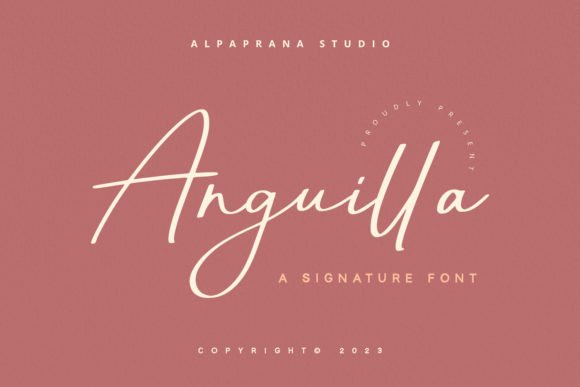
Finding a typographic voice that feels both distinctive and natural is a core challenge for web and product designers. A font that can convey personality without sacrificing readability is a rare asset. Anguilla is precisely that kind of asset: a signature font designed with a modern sensibility and a natural flow that makes it an exceptional tool for creating compelling digital experiences.
The Digital Personality of Anguilla
Anguilla belongs to the Script Amp category, a classification that hints at its amplified, expressive character. Its strokes possess a confident, organic rhythm that feels decidedly human, avoiding the stiffness of many purely geometric fonts. This creates a tone that is welcoming and authentic—a perfect foundation for brands that want to feel approachable yet professional. For a website, landing page, or app interface, this personality translates immediately into a positive first impression. It tells a user that the experience ahead is crafted with attention to detail.
The 'modern feel' described in its details is key. The letterforms are clean and well-structured, lacking the overt, sometimes chaotic flourish of traditional calligraphic scripts. This makes Anguilla remarkably versatile for digital contexts. It carries enough elegance for a luxury e-commerce banner, enough creativity for a designer’s portfolio header, and enough clarity for a clear call-to-action button on a SaaS product page.
Building Visual Hierarchy and Engagement
In web design, typography is your primary tool for establishing visual hierarchy—guiding a visitor’s eye and attention through your content. Anguilla excels in this role, particularly at the top of that hierarchy.
Hero Titles and Brand Statements
Your hero section is your digital handshake. Using Anguilla for the main headline immediately injects character and brand tone. For a creative agency, a coaching website, or a boutique online store, this font can make that key statement feel unique and memorable. Its natural flow encourages scanning and engagement, making visitors feel connected to your message from the moment they arrive.
Section Headings and Accent Phrases
Beyond the hero, Anguilla is powerful for key section headings within a long landing page or a course sales page. It breaks up content visually, signaling a new topic or benefit with stylistic emphasis. It can also be used sparingly for short, impactful phrases within content sections, such as pull quotes in a blog article or feature highlights on a product page. This varied use creates a rhythmic layout that is both beautiful and functional.
Call-to-Action Elements and Buttons
Perhaps one of its most strategic applications is in conversion-focused areas. A call-to-action phrase like "Start Your Journey" or "Get the Template" rendered in Anguilla on a button or standalone link can feel more inviting and less generic than a standard sans-serif. It personalizes the invitation, which can subtly increase trust and click-through rates.
Readability and Responsive Considerations
A decorative display font must perform under the practical constraints of the web. Anguilla’s balanced design supports strong readability when used appropriately.
For optimal legibility, use it primarily for headlines and short phrases at a sufficient size. On mobile screens, ensure your CSS sets a minimum font size that preserves the integrity of its letterforms—avoid letting it shrink to a point where details become muddy. It works well over both light and dark backgrounds; on dark backgrounds, ensure sufficient contrast by slightly increasing the font weight or adjusting the color value.
When overlaying Anguilla on images in banners or blog graphics, provide a clear zone for the text, perhaps with a subtle background tint or strategic positioning, to maintain contrast against busy visuals. Remember, its role is to communicate, not just decorate.
Crafting a Cohesive Online Identity
A font is rarely used alone. Consistent online identity relies on thoughtful font pairing. Anguilla’s expressive nature means it should be paired with a far more neutral, highly readable font for body copy, paragraphs, and UI labels.
A simple, versatile sans-serif like a geometric or humanist sans is a classic and effective partner. This pairing allows Anguilla to shine as the brand’s vocal personality, while the sans-serif performs the quiet, essential work of presenting readable content. For a more editorial or refined digital identity, such as for a magazine-style blog or premium brand, pairing Anguilla with a clean serif font for body text can create a sophisticated, layered typographic system.
This system—Anguilla for headlines, logos, and accents; a complementary sans or serif for all other text—can be applied consistently across your website, app screens, online store banners, email headers, and social media graphics. This repetition builds powerful brand recognition and trust.
Practical Applications for Digital Creators
Imagine applying Anguilla to specific projects:
- A Creative Portfolio: Anguilla for your name and project titles, paired with a minimalist sans for descriptions. It frames you as a skilled, individual creator.
- A Boutique Online Store: Use it for brand logo text, collection names on banners, and special offer callouts. It elevates the shopping experience beyond a transactional feel.
- A Coaching or Course Website: The font’s natural feel makes it ideal for headlines like "Transform Your Practice" or "Welcome to the Course," fostering a personal connection.
- A Product Landing Page: It can make the product name and key benefit statements stand out with memorable flair, differentiating your page from competitors.
- A Digital Brand Kit: Including Anguilla as the designated display font in your brand guidelines ensures all web and digital content maintains a unified voice.
Technical and Licensing Notes
Before integrating any font into your digital work, verify its technical specifications. For web use, confirm that Anguilla is available as a webfont (typically in WOFF or WOFF2 formats) and is compatible with common font loading methods. Check for included styles and weights—even a single-weight script font can be powerful if it has well-designed alternates or ligatures that add variety.
Licensing is a critical, practical step. Ensure you have the appropriate commercial font license for your use case. If you are using Anguilla on a website for a client, in an online store, on landing pages you sell as templates, or within any digital product, a standard commercial license is usually required. This protects you and respects the work of the type designer. Always read the specific license agreement provided with the font files.
Anguilla represents a bridge between artistic expression and digital usability. It provides a tool to infuse brand personality directly into the fabric of your websites, apps, and online stores, without compromising the clarity and structure users need. For designers and creators focused on building engaging, trustworthy, and effective digital experiences, it is a typeface worth exploring.